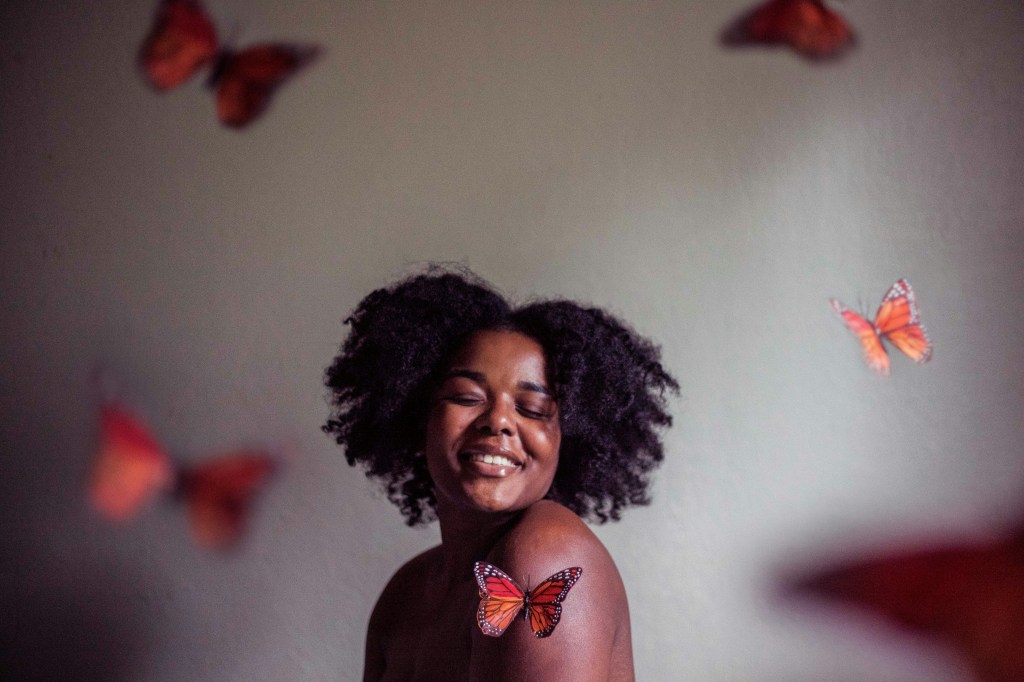
There is no greater act of defiant, poetic justice than Black women choosing to live well — fully, unapologetically, and in complete alignment with their highest selves. For centuries society has expected us to carry the weight of the world on our backs, to endure mistreatment in silence, and to sacrifice ourselves for the well-being of others. It’s boring, and thankfully, more and more of us are waking up to the fact that when we prioritize our own health, wealth, joy, and peace, we send a powerful message: We are no longer willing to be martyrs for a world that refuses to love or respect us properly.
Setting the Example for the Next Generation
Living well is not just a personal win that we should all devote serious time to. When we live well, it acts as a blueprint for every Black woman who comes after us. Whether she’s a young girl watching her mother or aunt break generational curses, or a woman reclaiming herself after years of neglect, our example gives others permission to do the same.
We shouldn’t need that permission, but we do because society’s insistence on perpetuating and even rewarding stereotypes that grind us down and actively prohibit living well — the strong Black woman is a unanimously successful favorite — For Black women who have been mistreated in countless ways — by men, by family, by so-called friends, by a racist, sexist society — our ability to thrive becomes the ultimate rebuttal to those who seek to keep us small. When we choose abundance, healing, and happiness, we make it clear: We are worthy, and we refuse to deny or ignore our right to live well.
What It Means to Live Well
I use the phrase a lot, but to truly live well as a Black woman means to nurture ourselves in every area of life. It means rejecting the notion that struggle is our birthright and instead embracing a life of ease, balance, and purpose. Living well is a radical act in the following ways:
- Physically: Prioritizing our bodies through rest, movement, nourishing food, and self-care is how we actively reject the “strong Black woman” trope that tells us to endure and even court pain in silence.
- Financially: Creating wealth, making sound investments, and refusing to be in survival mode is a key facet of living well. Financial independence means never staying in toxic situations because we feel we have no choice.
- Mentally and emotionally: Healing from generational trauma, setting boundaries, seeking therapy, and protecting our peace, these are part and parcel of a life well lived. Our emotional well-being is not negotiable.
- Spiritually: Deepening our connection to whatever higher power guides us, aligning our lives with our purpose, and embracing peace over chaos are necessary support when working to live well. As Proverbs 31:25 declares, “She is clothed with strength and dignity; she can laugh at the days to come.”
Fighting Mistreatment in Silence: The Ultimate Middle Finger
For too long, Black women have been encouraged to “turn the other cheek” while enduring mistreatment. Living well is its own form of resistance, one that includes good and bad, sometimes in equal measure. Fighting mistreatment doesn’t always mean loud battles — it can be the quiet, consistent work of removing ourselves from spaces that do not honor us, of choosing joy over suffering, of thriving despite the odds.
The world expects us to remain in struggle, to willingly embrace being cast as the ever-sacrificing, ever-giving backbone for, well, everyone. When we refuse, when we put ourselves first, it is the most defiant act we can take. Yet it is one that is inherently positive — not only for us, but for those around us who will naturally benefit from exposure to a Black woman living well.
Even the Bible supports this notion of living with wisdom and discernment. Ecclesiastes 3:12-13 reminds us, “I perceived that there is nothing better for them than to be joyful and to do good as long as they live; also that everyone should eat and drink and take pleasure in all his toil — this is God’s gift to man.”
Historically, Black women have been at the bottom of the social hierarchy, expected to serve, to endure, to be “strong” at our own expense. Those in power have long benefited from our exhaustion and self-sacrifice. So, when we live well — when we take luxurious vacations, create businesses, rest, love deeply, and refuse to accept the bare minimum — it disrupts the system. It angers those who have long profited from our pain. And that’s exactly why we must keep doing it.
Jesus himself set the example of prioritizing time for restoration and stepping away from environments that did not serve Him (Mark 6:31). As Black women, we have the right to do the same.
The Benefits and the Backlash of Prioritizing Ourselves
When we hyper-focus on living well, we experience deep fulfillment and self-love. But we must also prepare for resistance — from society, from family, from men who benefited from our self-abandonment. Some people will resent our boundaries. Others will call us selfish. But those opinions are not our burden to carry.
When we live well we can expect:
- More confidence, joy, and stability in every aspect of life.
- A shift in relationships — some will strengthen, others will fall away.
- Inspiration for other Black women who see you choosing yourself.
- Resistance from those who expected you to shrink.
Commit to Living Well — No Matter What
Black women living well is not a trend; it is a necessity. It is a form of reparations we give to ourselves, a way of rewriting an all too common, and exceedingly ridiculous narrative that was forced upon us. Instead, let’s build lives that feel good, not just ones that look good. Let’s take up space, demand more, and quietly but certainly refuse to shrink for anyone’s comfort. Because in the end, our joy, our peace, and our fulfillment are the truest forms of poetic justice.
As John 10:10 affirms, “I have come that they may have life, and have it to the full.” Living well is not just an act of self-love — it is a divine right.







Leave a Reply