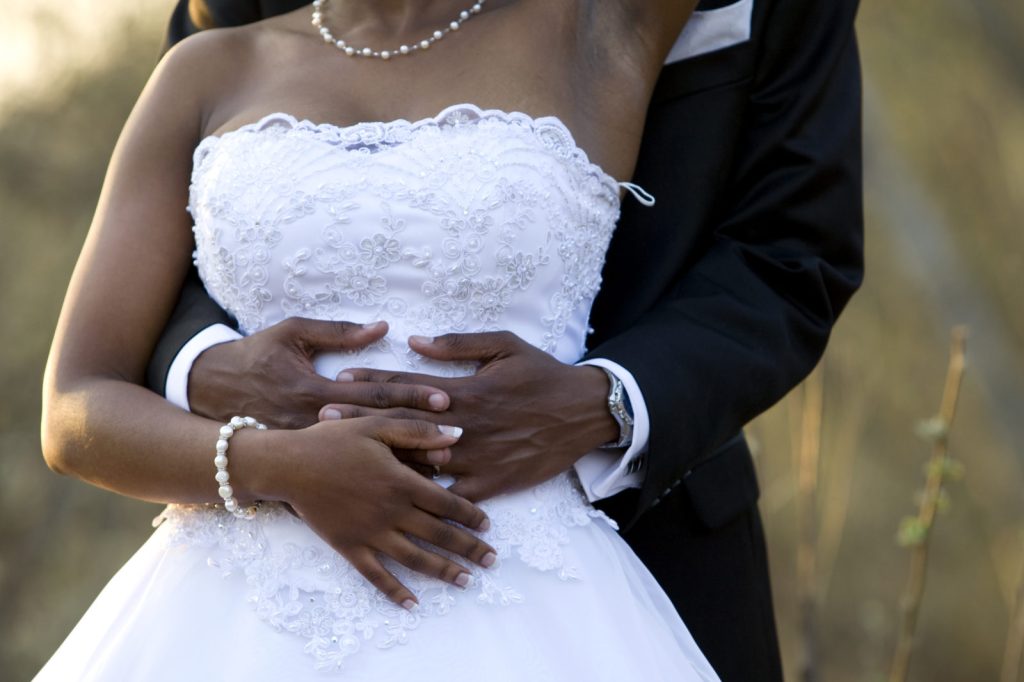
If you’ve ever been a Black woman sitting in a room where the topic of relationships and marriage comes up, you might have felt a moment of awkwardness or pressure. You know the statistics: 62% of Black women aren’t married. That number may be a little dated, but right now today society is all too ready to make that number feel like our personal failing.
But let’s pause for a moment and unpack that narrative. Who says that number is a problem? Who benefits from telling us that we’re incomplete without a husband? And why do we let that lie weigh on us as though it’s true?
As a public advocate for Black women, I consider these types of questions, personally and professionally. I’ve built a successful career, I’ve traveled a bit, I have some wonderful friends, I’ve achieved many of my personal goals, and set some new ones, but I have never been married.
Further, I am single, and dare I say, quite okay with that. Sure marriage would be great. I believe in the power and benefits of that union, but I’m no fool. Marriage to the wrong man? Yikes.
To the right one? It would be a truly fabulous story. But I’m not holding my breath in hope that I will find the love of my life in Whole Foods, Trader Joe’s, Target, or on the other end of an Amazon delivery. I’m not even looking for “my person.” I have other life goals upon which to focus my time and energy.
So, does that mean I’m done? That all hope of fulfillment is lost, and I should just give up the idea of being happy without a partner? Should I just crawl into the abyss, of course, leaving behind a manifesto owning up to my “failure” as a woman?
I suppose I could, if I agreed with that heaux sh$! But I don’t. I do not, in fact, have a problem with me being single. If I’m honest, and I’m just speaking for me now, being single has been a blessing in many ways. Esepcially when I look at the dangers and the unfortunate outcomes that many of my peers are facing or have faced in their hunt for a husband.
Let me be clear. I do not, and have never thought, that marriage is a bad thing. I’m a card carrying, K-drama loving romantic and a traditionalist! All of the romance novels I’ve published have happy ever afters that involve rings and walks down the aisle wearing fabulously tailored, pale colored dresses. But that’s fiction. In real life, I simply will not subscribe to the idea that being single is a bad thing. I actually think it’s something that we, as Black women, need to unapologetically own and enjoy.
Unraveling the Myth of Marriage as the Pinnacle
From a young age, many of us are taught that life isn’t complete without marriage. That you are not successful without a husband. A partner is the final piece to say, ok. You did that, girl. You won.
It’s one of the most common fairy tales sold to us in movies and shows and books, a message wrapped in traditions, its undercurrent running merrily through sundry conversations about adulthood. Marriage is often framed as one of the pinnacles of success for women. The top of a tall but lovely ladder that we should willingly scale in ice pick heels.
But when you step back and really analyze that expectation, you may begin to realize it’s not the one-size-fits-all narrative it’s been shaped up to be — especially for Black women. That story is far too simplistic, and there has to be more at the end of this particular yellow brick road, at least for us.
For centuries, marriage was a desirable, even a necessary goal worth striving to attain because for women it was tied to our economic and physical survival. But in today’s world, many of us have already checked off quite a few of the boxes that marriage was historically supposed to secure:
- We have financial independence now that we can get our own credit cards and mortgages and rent apartments.
- We have professional success thanks to easier access to student loans and the higher education that often leads to higher paying jobs — at least it did before the ubiquity of AI began to turn everything on its head. But that’s a conversation for another blog.
- We also have personal fulfillment and the ability to make our own decisions about what we want in life — without needing permission or even endorsement from a man.
Essentially, marriage is no longer a necessity to achieve those things or for our survival. In fact, when that storied union comes attached to the wrong partner, it might actually limit some of the freedom and power we’ve worked so hard to claim.
Society’s False Narratives and Their Impact
Then add to the mix these pervasive stories about Black women as undesirable; that one always makes me smile. Who wouldn’t when so many imitate everything about us, and men all over the world break their necks just to get a peek at us when we appear in their spaces? But the powers that be are still aggressively pushing that old trope that no one wants us, that we’re the least attractive, the most unintelligent and unrefined. That we’re too ghetto, too masculine, too whorish, too insert other dated and pitifully limiting and inaccurate stereotypes here.
It’s nonsense, and any reasonable person with a working brain and an ounce of discernment knows it. So, why does society still push the idea that Black women need to “fix” our singleness? Like we willfully created the problem, and it’s our own pigheaded shortsighted refusal that is the driving force behind it.
The answer is simple: control. The panicked, perennial stream of impassioned, even frenetic commentary around Black women’s singlehood is not issued out of concern for our happiness or safety — it’s largely about fear of what we can do when we realize we don’t need to conform to traditional structures like marriage.
When Black women willingly, even happily, stay single, we upend centuries-old power dynamics. We challenge the idea that a woman’s worth is tied to her relationship status. We show that it’s possible to lead fulfilling, rich lives on our own terms. And that, frankly, scares people. It puts control for our happiness, for an increasingly possible desire to manifest a life well lived, even to create well adjusted, happy children, squarely in our hands. As Kaitlyn Greenidge once said, Black women’s singlehood is often viewed as a threat because if we can create wonderful and fulfilling lives without following the traditional marriage script, other women may well realize they can do that too.
I would also posit the statistics about our singlehood are actively being misread. They’re not signs of failure, unless that’s the narrative you’re selling. In which case, yeah, okay, that very popular narrative plays and plays hard. But you could also see those stats as intentional signs of evolution. More than ever Black women are making deliberate choices about what kind of lives we want to lead. We are realizing that we are not, in fact, bound or limited by societal expectations. Therefore, we do not have to knuckle under to heavy pressure from interested parties to settle for less just to fit into someone else’s untailored ass narrative.
Why Being Single Isn’t a Problem; It Might Be a Solution
It’s time for Black women to reclaim the conversation about singleness. Being single isn’t always about lack. Sometimes it’s a deliberate and well reasoned choice. For Black women with their heads on straight and their eyes watching God, women who are determined to live well despite determined, systemic practices to the contrary, being single can be a time of growth, self-exploration, and freedom.
Let’s be for real for a minute and consider: How many married women do you know who complain about feeling trapped, unfulfilled, or burdened with responsibilities they didn’t anticipate? The pandemic offered us a unique lens on this. While many singles may have felt lonely, many married women found themselves juggling the lion’s share of household duties, homeschooling, caregiving, and keeping the peace. In contrast, as a single woman, I had the freedom to focus on myself, my career, and my well-being without a constant negotiation of responsibilities.
Instead of lamenting what we “lack” as singles, we need to embrace the benefits. These include: freedom to make decisions that serve us. Time to nurture friendships, passions, and hobbies. The space to discover exactly what we want out of life before committing to a partner who may or may not fit into that picture or have other ideas. That’s not all, but it’s definitely a great start.
Singlehood: A Time for Power Moves
Being single is not akin to being an undesirable or a leftover woman. For many of us, it’s been the best thing that could happen to us. How many stories have you heard about women who only realize their worth after they’ve invested years in a less than stellar marriage featuring multiple children and untold stress and wear and tear on their bodies, minds and spirits? And that’s not looking too closely at the good years they may have wasted trying to fit the wrong partner into a societal mold that might not hold up well upon close scrutiny.
Being single can be prime time to create the lives we want to live during our brief turn around the sun. It’s when we can more easily lean into our dreams and ambitions, stack our coins, build businesses, or advance our educational goals. In that regard, being single is actually helpful to those who aspire to marry, and hopefully, to marry well.
After all, if you want to attract a high-value partner, the best thing you can do is to become one yourself. Not for them, but for you. That way, when your turn at the altar comes around, you can enter that blessed union as a complete, self-sufficient woman who knows her worth — and can effectively minimize her risk.
But too often as Black women, we face intense pressure to settle. When that clock is ticking and that nebulous but pernicious timeline is buzzing, there’s no time to lean into the benefits of being single. How could we when we’re constantly being warned to adjust our standards, to make ourselves “smaller” so we can fit into the thin, rather shoddy box society wants us to get comfortable in?
I’m here to tell you — don’t do it. Settling is more often than not pure heaux sh$! It’s a trap that you will get caught in and very likely regret because it benefits the other party, not you.
Marriage and coupledom are lovely. But being single is not and never was the end of the world. It’s simply a state of being, and one that gives Black women the freedom they may need to expand and to live as boldly, loudly, and authentically as we want.
Strategies for Living Well While Single
- Create a vision for your life: Sit down and ask yourself what you really want — not what society says you should want. Do you want to travel more? Do you want to start a business? Do you want to buy a home or to invest and build a million dollar portfolio? Start working toward those goals now. When you’re single, your time and energy are truly your own, and those are powerful assets.
- Build your tribe: A common challenge for single Black women is the lack of community. We need connection and support, especially as a single mother. Whether or not you have children, surround yourself with people who uplift and empower you. Create a network of strong, like-minded women who celebrate your wins and help you through tough times. Friendship is a form of partnership too, and it’s just as valuable as romantic relationships.
- Own your narrative: The narratives around Black women’s singleness are often negative, but you have the power to change that. Share your story with its highs and even its lows with pride. Whether it’s through blogging, social media, or just conversations with friends and family, let people know that your single life is not one of lack but one of abundance. By telling and owning our stories, we can proactively and positively shift the public narrative.
- Don’t settle: The pressure to lower your standards is so very real, but it is not the only option you have if your Prince Charming is running a bit late. Hold out for a partner who truly respects you, one who supports your dreams, and treats you as an equal. Until then, focus on becoming the best version of yourself. You deserve that — and your future partner will enjoy and appreciate it.
- Invest in yourself: Whether it’s through therapy, education, or self-care, now is the time to pour into yourself. Formal therapy, informal self-help practices, exercise, growth and development, actively working to heal old wounds, understand your patterns, and develop a deep sense of self-love will all make you a better partner when the time is right.
High-Value Partnership Is Possible at Any Age
Let’s be clear: Being single doesn’t mean that you’ve completely given up on love or marriage. It simply means you’re choosing to do it on your own terms. If marriage is something you want, it’s never too late. Having children a la childbirth within the structure of marriage may have a timeline, but women can marry at all ages. Marriage doesn’t have to look like the traditional story that society likes to tell.
High-value partnerships are built on mutual respect, shared values, and emotional connection. If you’re waiting for that kind of love, it is out there, and it can come at any stage in life. But don’t put your life on pause while you wait. Live fully, passionately, and unapologetically in the meantime.
Moving Beyond the Statistics
When I think about that 62% statistic, I no longer roll my eyes. Instead I choose to rewrite the analysis and conclusions that typically follow that data point and similar ones like it. I don’t see that stat as evidence that Black women are on the shelf. I prefer to see it as us leaning into a not so alternative way of life where we are writing our own script. A script that society may raise its collective brow at, but one that nevertheless serves us very well indeed.
Why? Because we are thriving in our careers. We are raising healthy and well adjusted children on our own terms. We are building lives that reflect our true desires. Marriage, if and when it comes, will be the cherry on top. It will not be the whole pie.
Black women need to stop letting society tell us that we’re behind, or that we’re unworthy because we’re single, especially if we are single mothers. The truth is, we’re exactly where we need to be. Singlehood is not a problem that needs fixing — it’s a stage in life that can be just as fulfilling, joyful, and rich as any other.
So, to my fellow Black women who are single: know that you are not alone. You are not lacking. You are powerful, whole, and deserving of every good thing there is on offer — whether you walk this journey called life with a partner or not.


Leave a Reply